MC999442 - Microsoft Purview | Data Lifecycle Management: Retention based on “last accessed” for OneDrive and SharePoint files

Message Center

Summary

Microsoft Purview will enable retention policies based on the "last accessed" date for Office files in OneDrive and SharePoint, starting preview in January 2027 and general availability by March 2027. This helps delete obsolete data and improve Microsoft 365 Copilot responses, with no admin action required before rollout.

Discussionpowered by zap.ms

Last Updated

Oct 13, 2026

Published Feb 7, 2025

View version history

Service

Microsoft Purview

Tag

Updated message
New feature
Admin impact

Platforms

Web

More information

Updated October 13, 2026: We have updated the timeline. Thank you for your patience.

Enable admins to apply retention policy or retention label in OneDrive and SharePoint for files that have not been accessed by anyone in the organization after a period of time. In this release, users will be able to set up delete policies based on Last Accessed Date of Office file types. Non-office file types are not supported in this release.

This message is associated with Microsoft 365 Roadmap ID 472030.

When this will happen:

Preview: We will begin rolling out mid-January 2027 (previously late November 2026) and expect to complete by late February 2027 (previously end of December 2026)

General Availability (Worldwide): We will begin rolling out late February 2027 (previously early January) and expect to complete by late March 2027 (previously early February)

How this will affect your organization:

This feature will help delete obsolete data, which will improve the quality and relevance of Microsoft 365 Copilot responses.

This feature will be available by default.

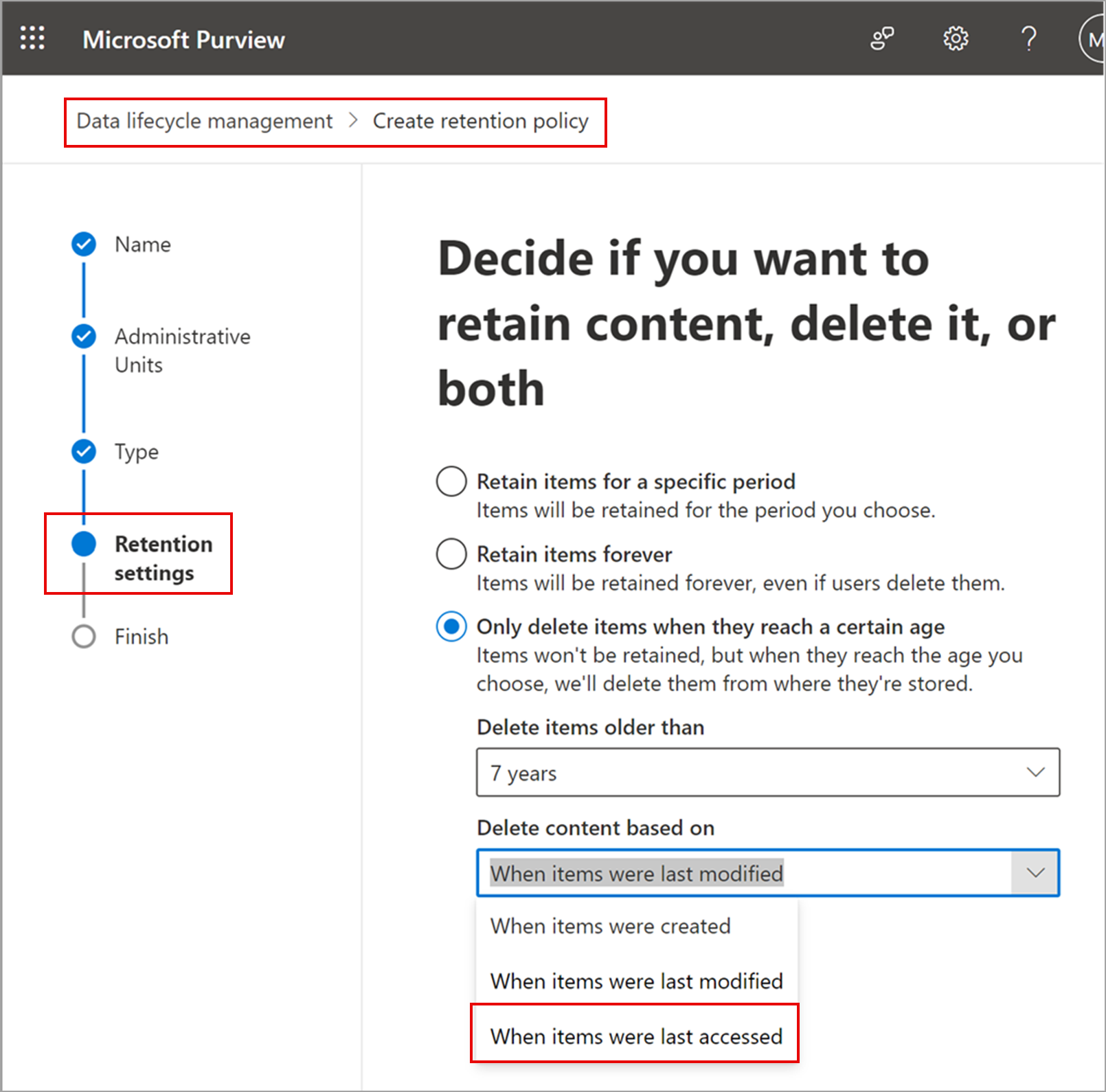
After the rollout, admins can use the retention control When items were last accessed when configuring labels and policies.

Retention settings page in Purview with the new “last accessed” option for retention policies:

admin controls

What you need to do to prepare:

This rollout will happen automatically by the specified date with no admin action required before the rollout. Review your current configuration to determine the impact for your organization. You may want to notify your users about this change and update any relevant documentation.

Before rollout, we will update this post with new documentation.

Version history

13 versions tracked

Updated 12 times since Feb 7, 2025. Microsoft only ever shows the current version; this archive preserves the history.

Compare any two versions

From
To
  1. Oct 13, 2026 · 06:15 PMLatest · v13

    Changed: Body, End date

  2. Sep 23, 2026 · 05:27 PMv12

    Changed: Body

  3. Sep 10, 2026 · 08:31 PMv11

    Changed: Body, End date

  4. Aug 18, 2026 · 04:39 PMv10

    Changed: Body

  5. Aug 18, 2026 · 04:39 PMv9

    Changed: Body, End date

  6. Jun 10, 2026 · 06:24 PMv8

    Changed: Body, End date

  7. Feb 4, 2026 · 06:07 PMv7

    Changed: Body

  8. Dec 17, 2025 · 06:47 PMv6

    Changed: Body

  9. Oct 23, 2025 · 07:23 PMv5

    Changed: Body, End date

  10. Sep 5, 2025 · 03:23 PMv4

    Changed: Body, End date

  11. Apr 2, 2025 · 02:03 PMv3

    Changed: Body

  12. Mar 28, 2025 · 04:19 PMv2

    Changed: Body, Tags, End date

  13. Feb 7, 2025 · 12:44 AMOriginal · v1

    Changed: Initial version