Metadata at Dec 3, 2025
Last Updated
Published Nov 7, 2025
Service
Tag
Platforms
MC1183611 - Consult and merge into a meeting or group call via Dual-Tone Multi-Frequency (DTMF)
Message Center
What changed since this version
Updated December 3, 2025:May 18, 2026: We have updated the timeline. Thank you for your patience.
Introduction
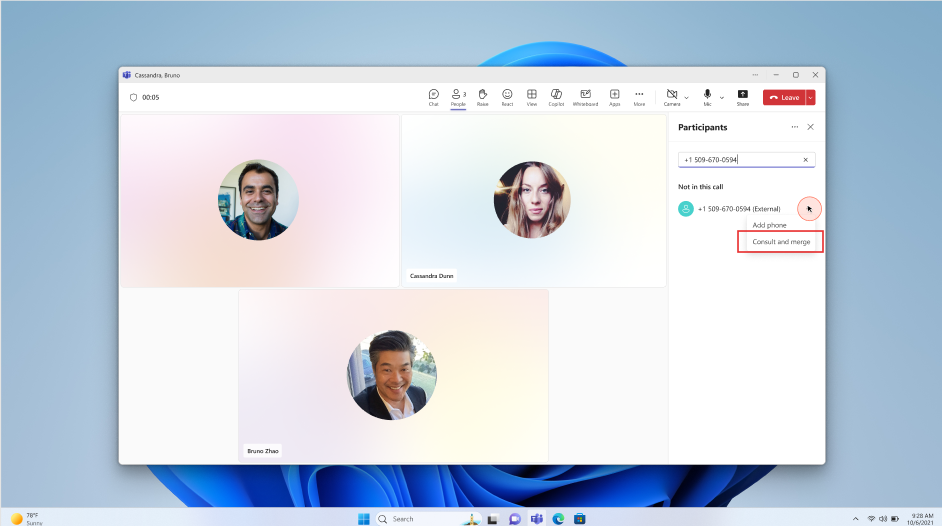
To improve collaboration and streamline meeting workflows, Microsoft Teams is introducing the ability to consult and merge Public Switched Telephone Network (PSTN) callers into active meetings—even when those callers are behind auto-attendants or Interactive Voice Response (IVR) systems that require Dual-Tone Multi-Frequency (DTMF) navigation. This enhancement allows users to reach subject matter experts via dial-in and seamlessly bring them into the broader conversation.
This message is associated with Microsoft 365 Roadmap ID 518218.
When this will happen:- Targeted Release: Rolling out early
FebruaryApril 2026 (previously earlyJanuary)March), expected to complete by mid-FebruaryApril 2026 (previously mid-January)March). - General Availability: Rolling out mid-
FebruaryApril 2026 (previouslyearly January)late March), expected to complete byend of Februarymid-June 2026 (previouslymid-January)late April).
How this affects your organization:
- Who is affected: All Microsoft Teams users who initiate or manage meetings with PSTN participants. Administrators overseeing Teams meeting policies and call configurations.
- What will happen:
- Users can consult with PSTN or Voice over Internet Protocol (VoIP) participants via the Participants panel.
- A new interface will allow users to access a dialpad to navigate IVR systems and auto-attendants using DTMF tones.
- Once the external party is reached, users can merge them into the ongoing meeting.
- No changes to existing administrator policies; feature is enabled by default.
What you can do to prepare:
- No administrator action is required for this rollout.
- If your organization uses custom training or helpdesk documentation, consider updating it to reflect this new capability.
- Before rollout, we will update this post with new documentation.
Compliance considerations:
No compliance considerations identified, review as appropriate for your organization.
Snapshot from Dec 3, 2025
Updated December 3, 2025: We have updated the timeline. Thank you for your patience.
Introduction
To improve collaboration and streamline meeting workflows, Microsoft Teams is introducing the ability to consult and merge Public Switched Telephone Network (PSTN) callers into active meetings—even when those callers are behind auto-attendants or Interactive Voice Response (IVR) systems that require Dual-Tone Multi-Frequency (DTMF) navigation. This enhancement allows users to reach subject matter experts via dial-in and seamlessly bring them into the broader conversation.
This message is associated with Microsoft 365 Roadmap ID 518218.
When this will happen:- Targeted Release: Rolling out early February 2026 (previously early January), expected to complete by mid-February 2026 (previously mid-January).
- General Availability: Rolling out mid-February 2026 (previously early January), expected to complete by end of February 2026 (previously mid-January).
How this affects your organization:
- Who is affected: All Microsoft Teams users who initiate or manage meetings with PSTN participants. Administrators overseeing Teams meeting policies and call configurations.
- What will happen:
- Users can consult with PSTN or Voice over Internet Protocol (VoIP) participants via the Participants panel.
- A new interface will allow users to access a dialpad to navigate IVR systems and auto-attendants using DTMF tones.
- Once the external party is reached, users can merge them into the ongoing meeting.
- No changes to existing administrator policies; feature is enabled by default.
What you can do to prepare:
- No administrator action is required for this rollout.
- If your organization uses custom training or helpdesk documentation, consider updating it to reflect this new capability.
- Before rollout, we will update this post with new documentation.
Compliance considerations:
No compliance considerations identified, review as appropriate for your organization.